The Heart of Darkness: Illuminating Phnom Penh's Iconic Gay Bar Legacy
Heart Of Darkness: A Beacon in the Shadows
Nestled in the vibrant, chaotic heart of Cambodia’s capital, the Heart of Darkness stands as more than just a bar—it’s a cultural institution, a living chronicle of Phnom Penh’s nightlife evolution, and one of Southeast Asia’s most legendary LGBTQ+ friendly venues. Established in the early 1990s during Cambodia’s fragile renaissance following the Khmer Rouge era, this iconic establishment has witnessed the city’s transformation from a post-conflict outpost to a bustling cosmopolitan hub. The Heart of Darkness has become synonymous with Phnom Penh’s nightlife, attracting a diverse clientele of locals, expatriates, tourists, and a vibrant gay community seeking acceptance and celebration. This extensive exploration delves into the history, atmosphere, cultural significance, and enduring appeal of this legendary venue that has, for three decades, served as a sanctuary of self-expression in the Cambodian capital.
The name itself—Heart of Darkness—pays homage to Joseph Conrad’s classic novel, yet in Phnom Penh, it represents not descent into moral ambiguity but rather a journey toward light, community, and liberation. In a city where traditional attitudes often coexist with modern progressive values, this establishment has carved out a unique space where diversity isn’t just tolerated but celebrated. The Heart of Darkness has navigated political changes, cultural shifts, and the evolving landscape of Phnom Penh’s social scene while maintaining its core identity as an inclusive space where the gay community has found both refuge and revelry.
Historical Origins: Post-Conflict Pioneering
The story of the Heart of Darkness begins in the early 1990s, a period of cautious optimism as Cambodia emerged from decades of conflict and isolation. Founded by John Edward Swain (commonly known as “John”), a British expatriate with a vision for creating a Western-style nightlife venue, the bar originally opened on Street 51 near the riverfront. This location placed it at the crossroads of emerging expatriate communities, United Nations personnel overseeing the country’s transition, and adventurous tourists beginning to rediscover Cambodia. From its inception, the Heart of Darkness attracted a diverse crowd, including members of Phnom Penh’s nascent gay community who found in its dimly lit interior a degree of freedom and anonymity rare in Cambodian society at the time.
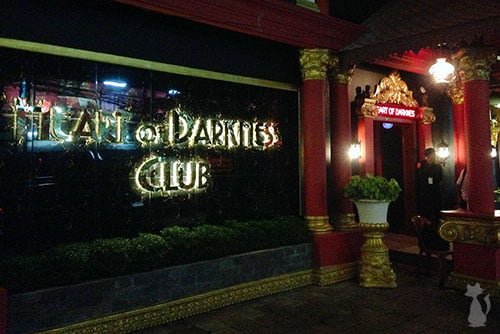
Throughout the 1990s, the Heart of Darkness became legendary for its anything-goes atmosphere, drawing journalists, aid workers, diplomats, and the colorful characters flocking to Cambodia during its tumultuous democratic transition. The bar’s reputation grew through word-of-mouth, travel guides, and its appearance in international media as emblematic of Phnom Penh’s wild, frontier-like energy. In 2007, facing development pressures and changing neighborhood dynamics, the Heart of Darkness relocated to its current three-story premises at #26, Street 51, just south of the Independence Monument. This move marked a new chapter, expanding its capacity while preserving the gritty, authentic atmosphere that had become its trademark.
The historical significance of the Heart of Darkness extends beyond its longevity. It represents one of Cambodia’s first modern nightlife establishments to survive and thrive through multiple political administrations, economic fluctuations, and societal transformations. For the LGBTQ+ community, its consistent presence provided a rare stable space in a changing city, where gay men and women could socialize with reduced fear of judgment or harassment. The bar’s endurance through Phnom Penh’s various “clean-up” campaigns and shifting nightlife regulations speaks to its deep roots in the city’s social fabric and its importance as a cultural touchstone.
The story of the Heart of Darkness begins in the early 1990s, a period of cautious optimism as Cambodia emerged from decades of conflict and isolation. Founded by John Edward Swain (commonly known as “John”), a British expatriate with a vision for creating a Western-style nightlife venue, the bar originally opened on Street 51 near the riverfront. This location placed it at the crossroads of emerging expatriate communities, United Nations personnel overseeing the country’s transition, and adventurous tourists beginning to rediscover Cambodia. From its inception, the Heart of Darkness attracted a diverse crowd, including members of Phnom Penh’s nascent gay community who found in its dimly lit interior a degree of freedom and anonymity rare in Cambodian society at the time.
Throughout the 1990s, the Heart of Darkness became legendary for its anything-goes atmosphere, drawing journalists, aid workers, diplomats, and the colorful characters flocking to Cambodia during its tumultuous democratic transition. The bar’s reputation grew through word-of-mouth, travel guides, and its appearance in international media as emblematic of Phnom Penh’s wild, frontier-like energy. In 2007, facing development pressures and changing neighborhood dynamics, the Heart of Darkness relocated to its current three-story premises at #26, Street 51, just south of the Independence Monument. This move marked a new chapter, expanding its capacity while preserving the gritty, authentic atmosphere that had become its trademark.
The historical significance of the Heart of Darkness extends beyond its longevity. It represents one of Cambodia’s first modern nightlife establishments to survive and thrive through multiple political administrations, economic fluctuations, and societal transformations. For the LGBTQ+ community, its consistent presence provided a rare stable space in a changing city, where gay men and women could socialize with reduced fear of judgment or harassment. The bar’s endurance through Phnom Penh’s various “clean-up” campaigns and shifting nightlife regulations speaks to its deep roots in the city’s social fabric and its importance as a cultural touchstone.
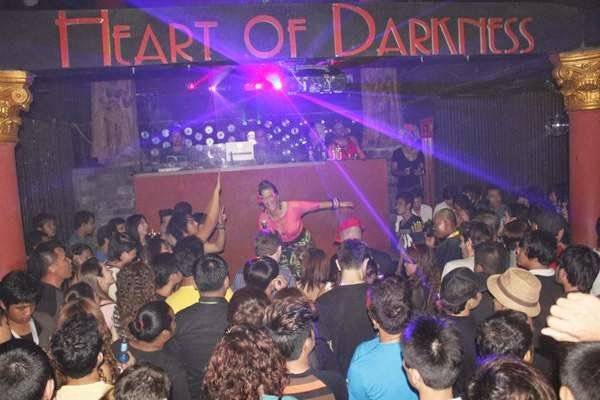
Walking into the Heart of Darkness is a sensory experience that unfolds across multiple levels, both physically and metaphorically. The ground floor presents an industrial-chic aesthetic with exposed brick walls, dark wood accents, and mood lighting that creates intimate corners amidst the social buzz. The iconic circular bar dominates the space, where skilled mixologists craft everything from classic cocktails to Cambodian beer served in frosty mugs. The décor incorporates subtle nods to Cambodian art and history alongside rock memorabilia and eclectic found objects, creating a visual tapestry that reflects Phnom Penh’s hybrid identity.
Ascending to the second floor reveals a different vibe entirely—a spacious dance area with state-of-the-art sound and lighting systems that transform as night deepens. Here, the Heart of Darkness showcases its dual personality: by early evening, a relaxed lounge atmosphere prevails, but as midnight approaches, the space morphs into one of Phnom Penh’s most energetic dance floors. The third level offers a rooftop experience with open-air seating, providing respite from the indoor intensity while maintaining connection to the vibrant energy below. This vertical journey through the venue allows patrons to curate their experience, whether seeking intimate conversation, energetic dancing, or atmospheric observation.
The auditory landscape of the Heart of Darkness has evolved with the decades while maintaining its eclectic core. Resident and visiting DJs spin everything from 90s classics to contemporary EDM, with themed nights catering to diverse musical tastes. The sound system—powerful yet finely tuned—ensures that music envelops rather than overwhelms, allowing for conversation even in the busiest hours. For the gay community, certain nights have become institutionally important, with regular drag shows, LGBTQ+ focused events, and a generally welcoming atmosphere that has made it a staple of Phnom Penh’s queer nightlife calendar. The Heart of Darkness manages to balance mainstream appeal with subcultural specificity, creating an environment where straight and gay patrons mingle comfortably—a relative rarity in Cambodia’s still-evolving social landscape.
Cultural Significance: More Than a Bar
The Heart of Darkness transcends its function as a mere drinking establishment to occupy a unique position in Phnom Penh’s cultural ecosystem. It serves as an informal community center for expatriates, a rite of passage for backpackers, a networking hub for journalists and NGO workers, and, most importantly for our focus, a cornerstone of Cambodia’s emerging LGBTQ+ social scene. In a country where gay culture traditionally operated discreetly, the visible presence and acceptance of LGBTQ+ patrons at such a high-profile venue has contributed to gradually shifting perceptions.
Throughout its history, the Heart of Darkness has hosted an astonishing array of events that mirror Cambodia’s social evolution: fundraisers for humanitarian causes, book launches by authors documenting the country’s transformation, art exhibitions by local creatives, and celebrations marking both Western and Khmer holidays. Its walls have witnessed conversations that shaped reporting on Cambodia’s development, friendships that crossed cultural divides, and romantic connections that defied conventional boundaries. For many in the gay community, it represented their first experience of socializing openly in Cambodia, a formative moment in personal journeys toward self-acceptance and public expression.
The bar’s cultural impact extends to its representation in literature, film, and travel writing about Cambodia. It appears in countless memoirs by expatriates, features in documentary films about Phnom Penh’s nightlife, and receives mandatory mention in travel guides ranging from Lonely Planet to niche LGBTQ+ travel resources. This media presence has cemented its status as an institution while introducing new generations to its legacy. Importantly, the Heart of Darkness has navigated Cambodia’s complex regulatory environment and occasional moral crackdowns with resilience, often serving as a bellwether for the limits of social tolerance in the Kingdom. Its continued operation through various political climates suggests a tacit understanding of its importance to Phnom Penh’s international image and tourism economy.
The LGBTQ+ Sanctuary: Evolution of Acceptance
While not exclusively a gay bar, the Heart of Darkness has played a pivotal role in Phnom Penh’s LGBTQ+ community since its early days. In the 1990s and early 2000s, when few venues offered safe social spaces for queer Cambodians and expatriates, it provided a relatively secure environment where same-sex couples could interact with reduced fear of harassment. The bar’s international clientele and management created a bubble of Western tolerance that gradually influenced local perceptions, demonstrating that gay-friendly establishments could operate successfully in the Cambodian context.
The evolution of the Heart of Darkness as an LGBTQ+ space reflects broader changes in Cambodian society. Where once gay patrons might have congregated in specific corners with cautious discretion, today they mingle openly throughout the venue, participate in dedicated events like drag nights and pride celebrations, and contribute visibly to the venue’s diverse atmosphere. The management has consistently supported LGBTQ+ initiatives, hosting events during annual Pride celebrations, cooperating with community organizations, and maintaining a firm non-discrimination policy that extends to both patrons and staff.
This progressive stance exists within Cambodia’s complex cultural framework, where traditional Theravada Buddhist values emphasizing social harmony often create surprising spaces for tolerance, even in the absence of formal legal protections. The Heart of Darkness has skillfully navigated this environment, fostering inclusion without provoking unnecessary backlash. For many gay tourists visiting Cambodia, it represents a recommended safe space in travel advisories and community networks. For local LGBTQ+ Cambodians, especially those from conservative provincial backgrounds, it offers a transformative experience of social freedom and community belonging. The bar’s significance in this regard cannot be overstated—it has literally and figuratively provided light in what might otherwise feel like personal darkness for those exploring their identity in a traditional society.
Contemporary Position and Future Trajectory
Today, the Heart of Darkness operates in a radically different Phnom Penh than the one it was born into three decades ago. The city now boasts sophisticated cocktail bars, dedicated gay venues like the Blue Chili and Space Hair, and a nightlife scene that caters to increasingly segmented tastes. Yet the Heart of Darkness retains its relevance through adaptive consistency—evolving just enough to stay current while preserving the essential elements that built its legend. It faces competition not only from newer establishments but also from changing social patterns, including the rise of dating apps that reduce reliance on physical meeting spaces and shifting tourist demographics.
The bar’s management has responded to these challenges with strategic innovations while honoring its heritage. Recent years have seen upgraded facilities, enhanced security measures, curated event programming, and increased engagement with digital platforms and social media. Yet the essential formula remains: a multi-level space offering varied experiences, an inclusive door policy welcoming all who behave respectfully, and that intangible quality of authentic Phnom Penh energy that newer venues struggle to replicate. For the gay community specifically, it continues to serve as both a social anchor and a symbol of hard-won visibility in Cambodian society.
Looking forward, the Heart of Darkness faces questions about how to honor its legendary past while remaining relevant to new generations. Its future trajectory will likely involve continued balancing between its identity as a mainstream nightlife institution and its role as an LGBTQ+ sanctuary. As Cambodia’s society continues to evolve—with increasing discussions about gender equality, same-sex relationship recognition, and LGBTQ+ rights—the bar may find opportunities to leverage its historical credibility to advocate for progressive change. What remains certain is that as long as Phnom Penh continues its transformation, the Heart of Darkness will continue to beat at the center of its nightlife, offering a space where darkness is not something to fear but rather a canvas upon which countless personal stories of connection, identity, and liberation continue to be written.
Conclusion: The Enduring Pulse of Phnom Penh
The Heart of Darkness represents something extraordinary in the landscape of global nightlife: a venue that has maintained its cultural relevance across decades of profound social change. More than just Cambodia’s oldest continuously operating bar of its kind, it is a living archive of Phnom Penh’s transformation, a testament to the power of inclusive spaces, and a beacon for those seeking community in a complex world. Its journey from post-conflict pioneer to established institution mirrors Cambodia’s own path toward recovery and redefinition.
For the LGBTQ+ community in particular, the Heart of Darkness has provided something invaluable: consistency in a changing city, visibility in a traditional society, and sanctuary in a world that doesn’t always understand. It has shown that businesses can thrive while fostering inclusion, that nightlife spaces can serve deeper social functions, and that darkness—when approached with courage and community—can reveal unexpected light. As Phnom Penh continues to grow and change, the steady pulse of the Heart of Darkness reminds us that some institutions become legendary not through grand design but through the simple, daily act of providing space where everyone, regardless of identity, can find their place in the night.